
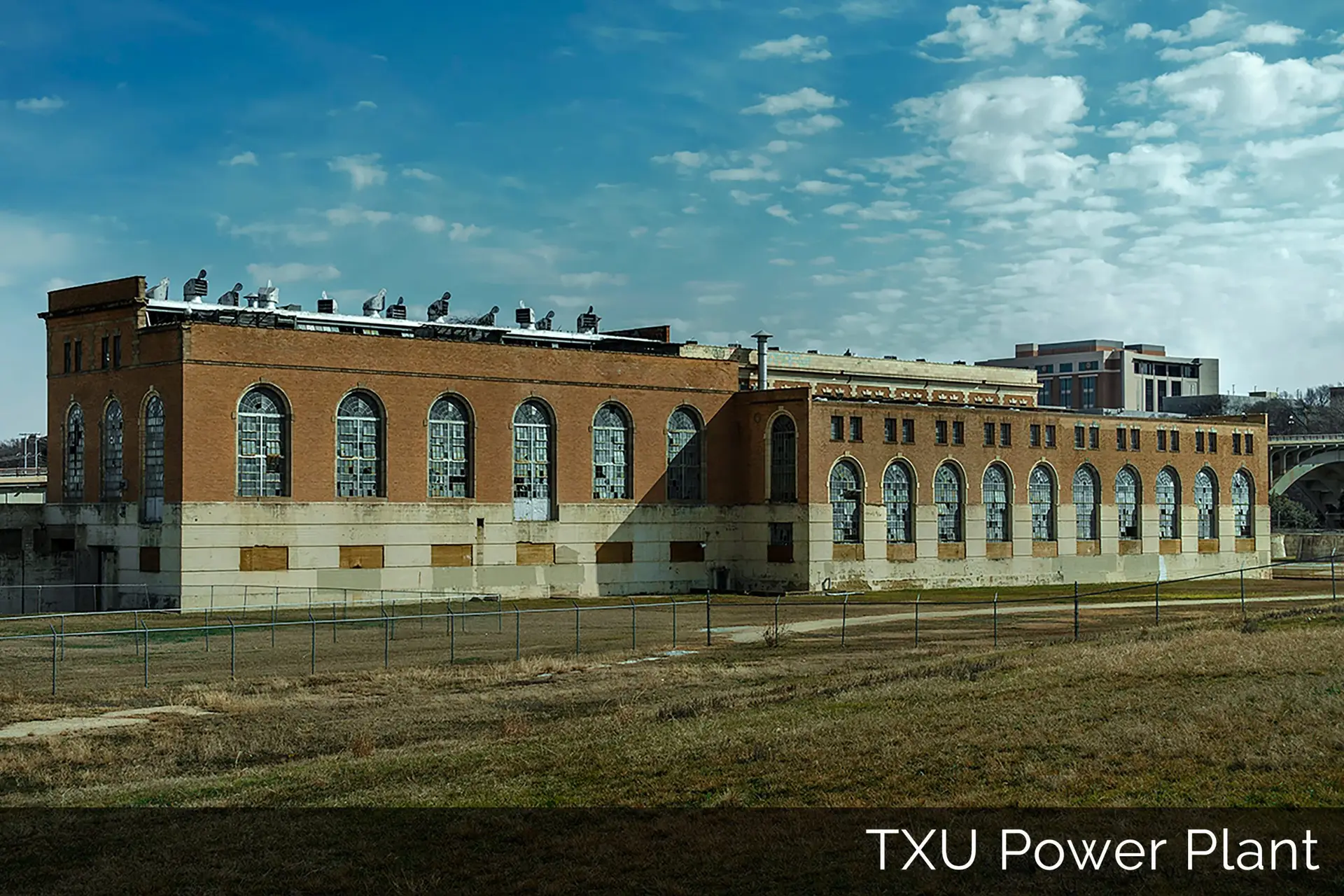
TXU North Main plant off market. TCC won’t oppose historic protection
Tarrant County College officials confirmed Monday they pulled the historic TXU North Main Power Plant and 8-acre site off the market after receiving just one bid, which was lower than the property’s $9.4 million appraised value.
“We’re required (by state law) to get the appraised value,” Pamela Anglin, the college’s financial officer, said in an interview Monday.
Monday afternoon, Anglin briefed the Fort Worth Historic and Cultural Landmarks Commission on the college’s posture toward a proposed historic protection.
TCC did not oppose the city’s petition to attach “Highly Significant Endangered” status to the property, as landmarks commissioners deliberated on the proposal during their February meeting Monday. Such status would provide significant, but not absolute, protection against demolition.
The landmarks commission voted 7-0 to recommend adding the Highly Significant Endangered status to the property. The City Council, which has final say, will hear the case next, most likely at a meeting in March, Lorelei Willett, the city’s historic preservation officer, told the commissioners.
Had TCC officials opposed the historic status, state law would require a 75% supermajority vote of the commission and City Council to approve the Highly Significant Endangered status. Without the college’s opposition, the commission and council only need a simple majority to approve the historic protection. The plant currently has no protection against demolition.
Monday’s comments to the commission were the first made publicly by TCC officials on how it viewed the city’s petition. Willett told the Report city staff was unaware of TCC’s stance until Anglin’s remarks.
Commissioners thanked TCC officials for their stewardship of the property over the more than two decades the college has owned it. Anglin told commissioners TCC has stepped up measures to ensure safety and security, including night patrols and a new 6-foot fence with razor wire around the property, to deter vandals.
“To me, this is an important step toward protecting a true Fort Worth landmark,” Commissioner Graham Brizendine said during the meeting.
Anglin told the Report that the one bid, which TCC did not disclose, would have retained and protected the property.
Jerre Tracy, executive director of the Historic Fort Worth preservation nonprofit, told the landmarks commissioners, “Historic Fort Worth has felt like a mother hen about this power plant.”
That started years ago with demolition of the plant’s smoke stacks, she said. The plant has been closed and vacant since 2004, and Historic Fort Worth has put the property on its annual “Most Endangered Places” list several times.
Protection of the plant will boost conversations in Fort Worth about how retaining and redeveloping historic buildings preserves the city’s character and adds value for property owners, Tracy said.
Redevelopment of historic buildings can bring significant state and federal incentives that cover 45% of eligible costs.
“People can now talk about it, think about it,” Tracy told commissioners.
In January, city officials initiated the case and had Fort Worth’s preservation officer direct it to the landmarks commission for a public hearing, held Monday, as required by state law.
Tarrant County College put the shuttered power plant up for sale this fall. Historic Fort Worth subsequently asked city officials to seek the highly significant endangered status for the plant.
Under Fort Worth’s preservation ordinance, a property has “significance” if it meets at least three of the following:
- Is distinctive in character, interest or value and exemplifies the cultural, economic, social, ethnic or historical heritage.
- Is an important example of a particular architectural type or embodies elements of architectural design, detail, material or craftsmanship that represent a significant architectural innovation in Fort Worth.
- Has been identified as the work of an important architect or master builder who has contributed to the development of the city.
- Has been identified with a person or persons who significantly contributed to the culture and development of Fort Worth, Texas or United States.
- Bears a significant relationship to other distinctive buildings, structures, sites, objects or areas or contributes to the overall character of the area.
- Possesses significant archeological value.
- Is the site of a significant historic event.
- Is designated as a Recorded Texas Historic Landmark, State Archeological Landmark, or an American Civil Engineering Landmark, or is listed on the National Register of Historic Places.
Lorelei Willett, the city of Fort Worth’s historic preservation officer, said the staff determined the property meets the first, second, fourth and fifth criterion.
Scott Nishimura is senior editor for local governmental accountability at the Fort Worth Report. Reach him at scott.nishimura@fortworthreport.org.
At the Fort Worth Report, news decisions are made independently of our board members and financial supporters. Read more about our editorial independence policy here.
This article first appeared on Fort Worth Report and is republished here under a Creative Commons Attribution-NoDerivatives 4.0 International License.