

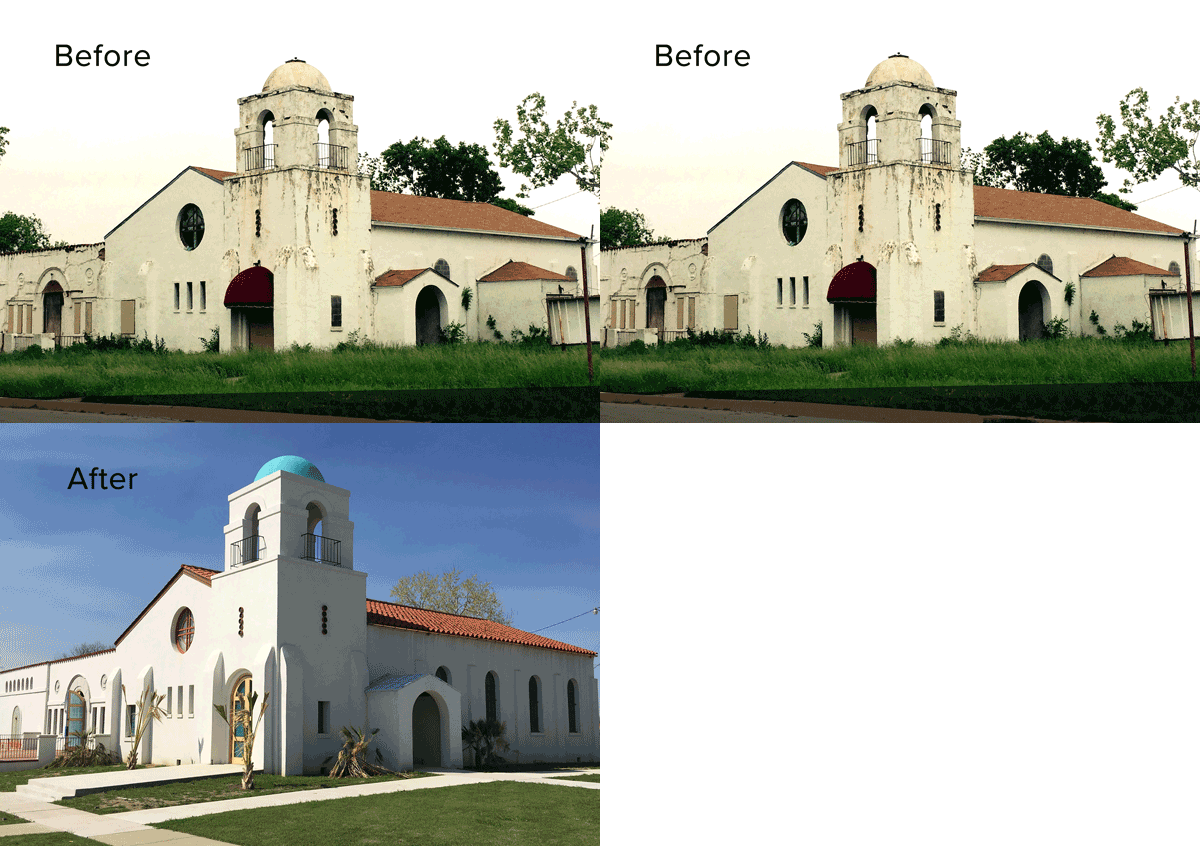
The annual Most Endangered Places list, a vital program of Historic Fort Worth, Inc., is a marketing and educational tool that spotlights historic resources threatened by a variety of circumstances–extremely deferred maintenance, no local landmark designation, loss of parking, and lack of awareness of economic incentives to rehab historic buildings. Owners of properties recognized as “Endangered” benefit from increased public awareness and assistance from Historic Fort Worth, Inc. to address these issues. The List is released each year in May, during National Preservation Month.
2026 Most Endangered Places List
Mary Elizabeth Apartments
2008-2012 Hemphill Street
Date Built: 1929
Owner: Steven Chacko
Historic Designation: H&C
Designer:
The property at 2008 Hemphill Street is within the locally designated and nationally recognized Fairmount/Southside Historic District.
The apartments consist of two mirror-image, yellow brick buildings flanking a central courtyard, each 2 stories tall with hip roofs. A mission parapeted wall joins the buildings and screens the courtyard. This is one of several apartment complexes in south Fort Worth with a courtyard plan owned by the Management Co. of Texas in the 1920’s. In 1986, the Fort Worth Southside Historic Resource Survey described this apartment complex as excellently maintained.
Since then, these once elegant apartments have fallen into disrepair and are uninhabitable. The complex has been plagued with vandalism, fires, and has been stripped of metal, electrical wiring and some windows. The northernmost apartment building has been damaged the most. The City’s Code compliance department has boarded up parts of the complex several times.
However, the much of the character and integrity of the structures remain in their masonry and old growth beams. They are ready for restoration and rehabilitation.
Swift Employee Staircase and Victorian Era Wall
709 NE 23rd Street
Date Constructed: 1902
Owner: Fort Worth Heritage, LLC
Historic Designations: NR, H&C
Previous Listing: None
Fort Worth’s population tripled within the first decade of the opening of the Swift and Armour meatpacking plants in 1902. The two companies built their plants three miles north of the downtown business district largely due to the efforts of Louville Veranus Niles of the Fort Worth Stockyards Company. Swift and Armour employed thousands of Americans and European immigrants. Niles City was incorporated in 1911 and annexed by Fort Worth in 1923.
In Swift’s heyday, 3,000 employees generated a $10 million annual payroll. The 235-acre site became a city within a city with a baseball team, bowling league, choral club and newspaper. The Victorian-style brick wall marked boundaries of the plant, and the elaborate south-facing double staircase provided an employee entrance from the parking lots across NE 23rd Street.
Very little remains of the Swift plant except for the administration building, the staircase and some of the Victorian-era walls that were originally on the west, south and east sides of the complex. They appear to be at significant risk of demolition by neglect.
Fort Worth Community Arts Center
1300 Gendy Street
Date built: Initially built in 1954 with additions in 1966 and 1974
Owner: City of Fort Worth
Previous Endangered Listings: 2012, 2013, 2023 and 2024
The Fort Worth Art Association was established in 1938. Its public art exhibits were limited to a wing of the downtown public library. Finally in 1954, after years of planning and fund raising that included a “Mint Bar Party” attended by Joan Crawford, the Art Association moved into its own Fort Worth Art Center building. The initial structure was designed by Herbert Bayer, an Austrian graphic designer, architect, and landscape designer. Mr. Bayer was known as the “curator of aesthetics” and he designed buildings and landscapes in Aspen, Colorado, a place he shaped for over thirty years.
Next, in 1966, the William Edrington Scott Theater was added to the site. The theater was designed by Fort Worth’s Cornell-educated Joseph R. Pelich with theater designer Donald Oenslager of New York. Finally, in 1974, the firm of O’Neil Ford and Associates of San Antonio expanded the Arts Center. O’Neill Ford is known as the “grandfather of Texas Modernism.”
Prior to becoming the first location for the Modern Art Museum, the Center was both a museum and an art school with administrative offices on the second floor. More recently, the building has been the headquarters of several art-affiliated groups. Deferred maintenance, paid parking and an attempted public-private partnership have forced the arts groups out of the building. The building remains shuttered.
Date Constructed: 1931
Owner: Cleopatra Investments, Ltd.
Historic Designations: NR, RTHL, HSE
Previous Listings: 2004, 2005, 2008, 2009, 2010, 2011, 2012 plus Preservation Texas’ Endangered List in 2008
The massive eight story 100-foot by 600-foot building constructed in 1931 as the Texas & Pacific Warehouse has been on Historic Fort Worth’s endangered list seven times and on Preservation Texas’ Endangered List in 2008.
The T&P Warehouse was the outgrowth of a 1920’s Chamber of Commerce effort to generate $100 million in civic and business improvements for Fort Worth. Designed by Wyatt C. Hedrick’s firm, with Herman Paul Koeppe as the lead, the building was constructed by P. O’Brien Montgomery of Dallas. Both the T&P Warehouse and its companion railroad building, the T&P Terminal, are stunning examples of Zig-Zag Moderne architecture.
The building has local, state and national historic designations, making it eligible for state tax credits that can offset some of the restoration expenses. Despite that, and being under the same ownership since 1998, no vision for it has come to fruition. In 2017, the city nearly condemned the warehouse, forcing the owner to stabilize the building, board up windows, address basement flooding and a crumbling roof.
In 2023, the city hired an engineering group to study the warehouse’s structural integrity. In an 80-page report, they deemed the building needed $2 million in repairs but could be saved.
Today, the commanding T&P Warehouse is a vital link to Fort Worth’s railroad heritage and the development of the Lancaster Corridor. Vacant buildings are never safe from vandals, fires and other negative impacts. It is time for a suitable project to be developed for the T&P Warehouse.
Local, state and federal tax credits
or incentives for the rehabilitation of historic buildings
PRESERVATION GRANTS
African American Cultural Heritage Action Fund Grants of the National Trust for Historic Preservation
The African American Cultural Heritage Action Fund works to advance the broader preservation movement towards a more diverse and equitable representation of American history. Grants showcase the beauty and complexity of Black history and culture in America, while underscoring the urgent need to protect, preserve and interpret these invaluable American assets.
Action Fund grant requirements and deadlines vary. Visit the links below to access the most up-to-date information, as well as for application guidelines and deadlines. https://savingplaces.org/action-fund-grants
Action Fund National Grant $50,000 to $150,000
Action Fund national grants advance ongoing preservation activities for historic places such as sites, museums, and landscapes that represent African American cultural heritage. Funding supports work in four primary areas: Capital Projects, Organizational Capacity Building, Project Planning, and Programming and Interpretation. https://savingplaces.org/action-fund-grants
Preserving Black Churches $50,000 to $200,000
The Action Fund, with support from the Lilly Endowment Inc, is investing in historic Black churches and congregations to reimagine, redesign, and deploy historic preservation to address the institutions’ needs and the cultural assets and stories they steward. We are leveraging historic preservation as a tool for equity and reconciliation and celebrating historic Black churches as centers of heritage, community, and cultural life. https://savingplaces.org/preserving-black-churches-guidelines
National Fund for Sacred Places: $50,000 to $250,000
A collaboration between Partners for Sacred Places and the National Trust for Historic Preservation. https://sacredplaces.org/our-services/grant-opportunities/
Grants/Funding Incentives Affiliated with the Texas Historical Commission
Texas Preservation Trust Fund $10,000 to $50,000
For eligible historic structures, archeological sites, and heritage education projects https://thc.texas.gov/preserve/grants-tax-credits-and-funding/texas-preservation-trust-fund
The Texas Historical Commission (THC) awards grants for preservation projects from the Texas Preservation Trust Fund (TPTF). The Texas Legislature established the TPTF in 1989. The fund is currently managed by the Texas Treasury Safekeeping Trust Company. Investment earnings are distributed as matching grants to qualified applicants for acquisition, survey, restoration, preservation, planning, and heritage education activities leading to the preservation of historic architectural and archeological properties and associated collections of the State of Texas. Competitive grants are awarded on a one-to-one match basis and are paid as reimbursement of eligible expenses incurred during the project.
The TPTF grant program application process is a two-step process. All applicants are required to submit an application form to the THC for review. The THC selects the highest-priority projects from the initial applications and invites those applicants to move forward to the second step.
Grant awards are typically in the $10,000 – $50,000 range.
To be eligible for grant assistance, applicants must provide a minimum of $1 in cash to match each state dollar of approved project costs. For every $2 spent, $1 is reimbursed, up to the grant amount.
Grant applications are scored in four areas: endangerment, significance, project viability, and special considerations. Review the scoring criteria in the TPTF Grant Program Application Guide (link below).
Grant awards may be used for restoration work, architectural planning, archeological investigation, archeology curatorial, preservation planning, resource survey, and heritage education training.
Texas Historic Preservation Tax Credit Program
The Texas Historic Preservation Tax Credit Program was established through Texas House Bill 500 during the 83rd Texas Legislative Session and went into effect on January 1, 2015. The state historic tax credit is worth 25 percent of eligible rehabilitation costs and is available for buildings listed in the National Register of Historic Places, as well as Recorded Texas Historic Landmarks and Texas State Antiquities Landmarks. The program is administered jointly by the Texas Historical Commission (THC) in cooperation with the Texas Comptroller of Public Accounts. Administrative rules for implementation of the program are found in the Texas Administrative Code, Title 13, Part II, Chapter 13.
The Federal Historic Preservation Tax Incentive Program also offers a 20 percent tax credit for the rehabilitation of historic buildings. Established in 1976, the federal historic tax credit program is also a significant financial incentive for the reuse of historic buildings and revitalization of historic downtowns. Applicants are encouraged to take advantage of both financial incentives when possible and apply to both programs together.
OTHER SOURCES OF FUNDING
HistoricFunding.com was created by the team that manages the comprehensive resource for historic preservation and cultural resource management, PreservationDirectory.com.
Launched in Spokane, WA in 1999, based in Portland, OR from 2002-2018, and now located in Rochester, NY, PreservationDirectory.com provides a wide-array of resources for those looking to restore their home or commercial building; add their property to the National Register of Historic Places; find employment in the historic and cultural resources fields; find and work with their local historical society, State Historic Preservation Office, or downtown and main street program; read about local and national news of interest to the preservation community; find a great lecture, conference or historic tour; and so much more.
The number one asked question, received on a daily basis, though, is “how do I find funding for my project?”. While PreservationDirectory.com does provide basic information about grants, tax incentives and other funding sources, we wanted to create the most comprehensive funding resource for historic preservation, cultural resource management, and the arts.
HistoriCorps Not Money; but people with restoration skills
HistoriCorps is a 501(c)(3) nonprofit that provides volunteers of all skill levels with a hands-on experience preserving historic structures on public lands across America. Volunteers work with HistoriCorps field staff to learn preservation skills and put those skills to work saving historic places that have fallen into disrepair. HistoriCorps works to ensure America’s cultural and historical resources exist for generations to come. https://historicorps.org/
City of Fort Worth Historic Rehabilitation Program. (A 10-year property valuation tax freeze on the city’s portion of your tax bill.)
https://www.fortworthtexas.gov/departments/development-services/historic-preservation#section-5
Statewide Program for 25% Restoration Tax Credit for commercial and/or non-profit owned buildings
https://www.thc.texas.gov/public/upload/publications/tax_credit-report-2022.pdf
Federal Incentive for 20% Tax Credit for Commercial Buildings
The State and Federal Tax Credits can work together for certain projects.
https://www.thc.texas.gov/public/upload/forms/factsheets/thc-architecture-pti-factsheet.pdf
Historic Properties Saved Through Preservation Advocacy
Established in 1969 and honored with the Governor’s Award in Historic Preservation in 2009, HFW is dedicated to preserving Fort Worth’s unique historic identity through education, stewardship, and leadership. The organization’s headquarters, a museum and preservation library are located in the 1899 McFarland House, 1110 Penn Street.
As a comprehensive preservation charity, HFW’s board and staff work behind the scenes and in the public arena to create opportunities for those places they do not own that shape Fort Worth’s unique historic identity. Examples of successes from this community-wide program follow:

African American Knights of Pythias Hall (1925) 900 East 2nd Street: HFW funded a successful nomination for the Plaza’s placement on the National Register of Historic Places at the national level of significance. This effort spawned a sensitive restoration plan which is being implemented.
Chase Court (1906) 1700 Hemphill Street: It’s placement on the endangered list prompted the neighbors of Fort Worth’s first gated community to establish a local historic district. (Listed in 2014
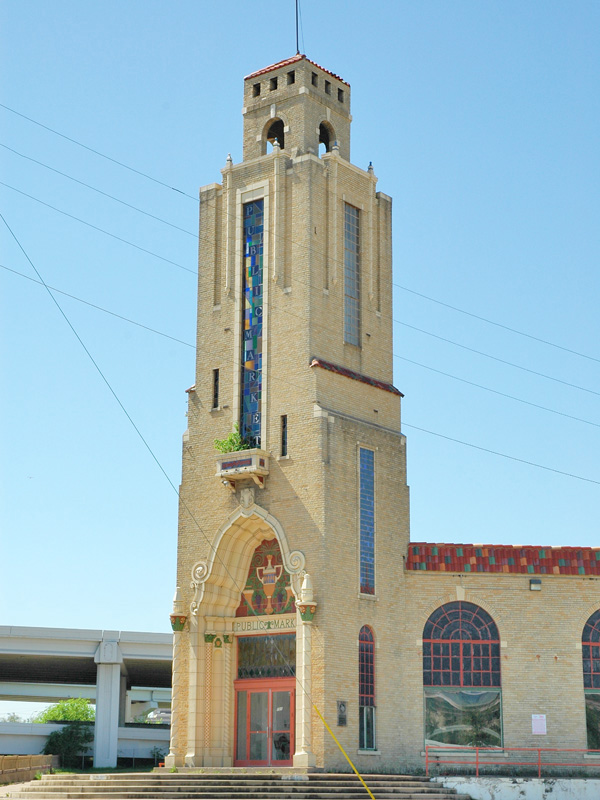
Fort Worth Public Market (1937) 2717 Avenue B: With one month left before its demolition, HFW developed an e-blast about this landmarked building and an owner of a restoration firm bought the building and restored it.
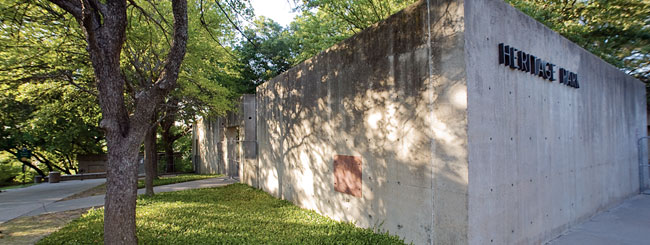
Heritage Park Plaza (1976-80) Western edge of the bluff at Houston Street: HFW funded a successful nomination for inclusion in the National Register of Historic Places that created the insight for a new, sensitive restoration plan. (Listed 2005, 2008, 2009 & 2012)
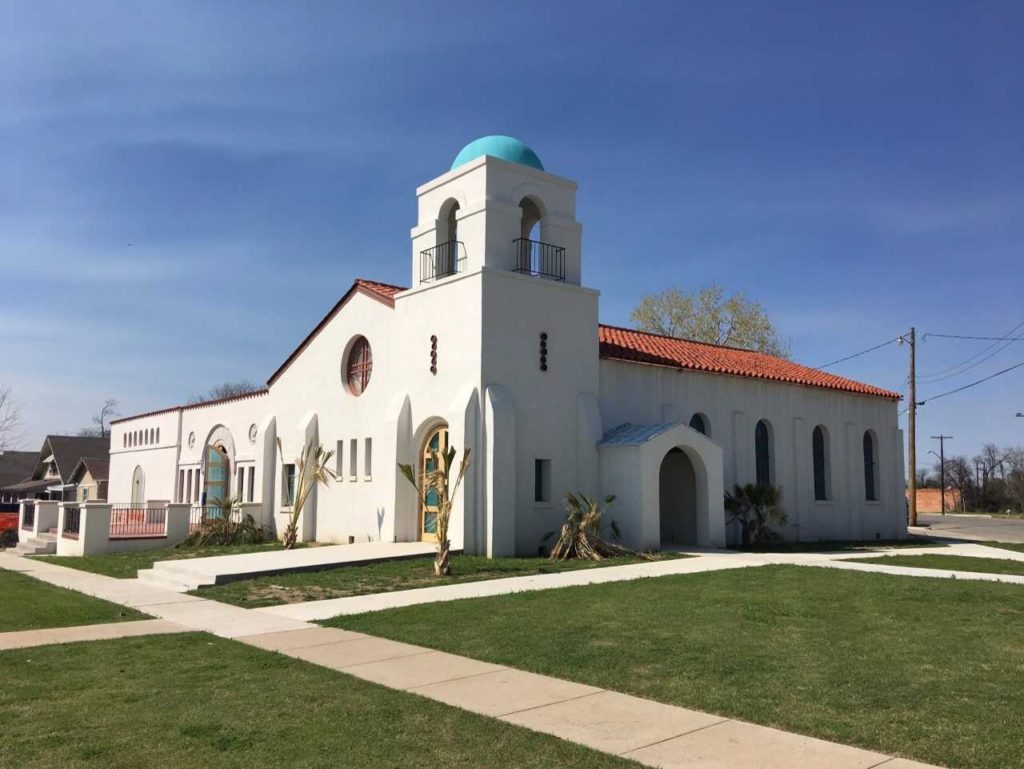
Meisner-Brown Funeral Home (1937) 2717 Avenue B: With one month left before its demolition, HFW developed an e-blast about this landmarked building and an owner of a restoration firm bought the building and restored it.
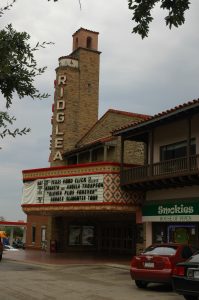
Ridglea Theater (1950) 6025 Camp Bowie Blvd.: HFW stopped a plan to demolish all but the tower and the lobby until a new owner emerged who restored the theater back to its original splendor. (Listed in 2004, 2005, 2007, 2008 and 2010.)

Stockyards (1900-24): North Main Street at Exchange Avenue and spanning for many blocks. HFW funded a historic resources survey that resulted in a local historic district. (Listed in 2012 and 2014).
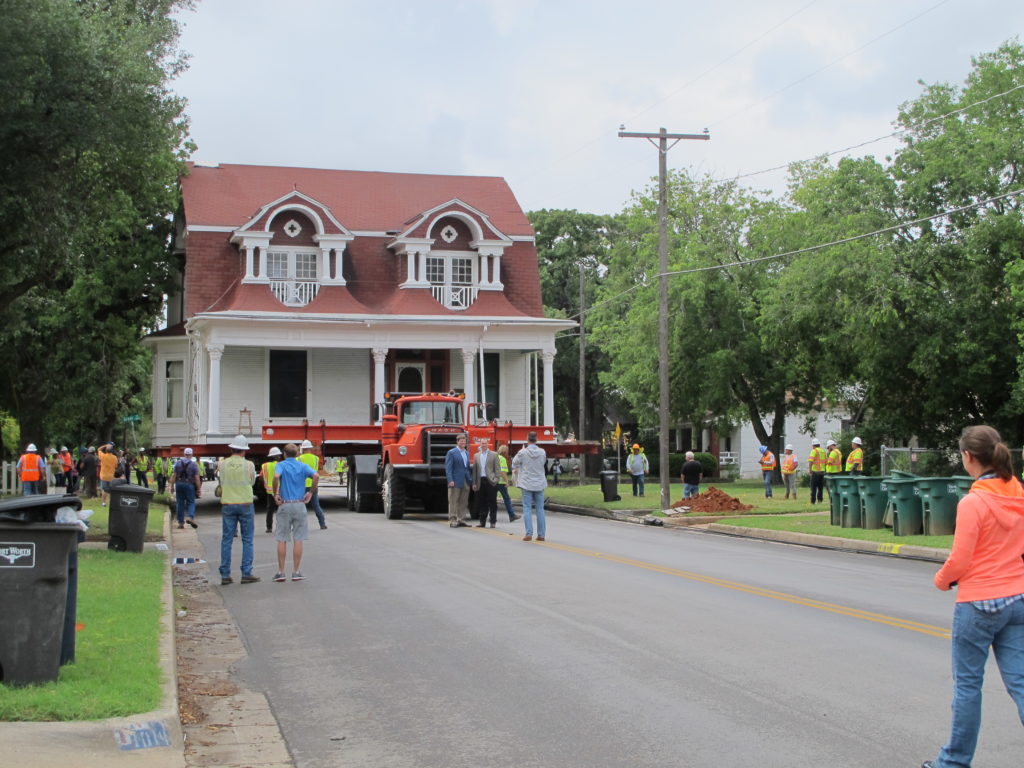
Talbott-Wall House (1903) was at 915 Samuels Avenue and moved to 1102 Samuels Ave.: HFW worked with a developer to move this grand house to a new lot down the street allowing preservation and progress to come together on Samuels Avenue.
To view a comprehensive list of all the past years, it is available here : 2004-2022 – HFW Endangered List.
2026 Most Endangered List
2025 Most Endangered List
2024 Most Endangered List
2023 Most Endangered List
2022 (list) (narrative)
2019 (list) (narrative)
2018 (list) (narrative)
2017 (list) (narrative)
Take a map-based tour of 2017’s Most Endangered Places.
Thanks to Kate Holliday and son William Dibble for their work on this project.
2016 (list) (narrative)
2015 (list) (narrative)
2014 (list) (narrative)
2013 (list) (narrative)
2012 (list) (narrative)
2011 (list) (narrative)
2010 (list) (narrative)
2009 (list) (narrative)
2008 (list) (narrative)
2007 (list) (narrative)
2006 (list) (narrative)
2005 (list) (narrative)
2004 (list) (narrative)
Photos from 2019 MEP announcement at Thistle Hill